Certified Phoenix

mack b cert

I hold no canon, no interest in theism, astrology, numerology, any mysticism. I witness only an existential logic to this life. Accordingly 55 years late my certificate of birth arrived today.

Keen affirmation yet, it doesn’t resemble my children’s birth certificates. Appropriately my birth is certified by abstract. This brings wicked joy. No doctor spared time to certify, lest attend my birth in that squat three-room working-class row house. Some years later Herr Doctor Michael Lutter was tasked to certify me “legitimately illegitimate” from said event; sufficient declaration to gain passport under name. A legal obligation for my de facto transport.

Perhaps a thank you is in order for that anonymous neighbor tipping authorities to the fact a baby was born in that house and now he’s gone, alluding to even more unholy transaction. Maybe neighborhood NAZIs have their place, an extralegal purpose, if not a moral order.

The intrigue brought attention to my illegal status and migration to France. Prompted, authorities acted. You know, as my father’s Commanding Officer said, “you can’t just take a baby, Sarge”.

Really all nonsense, yet to me, certification has gravitas in the Christian World. Surely not as much in the Second Millennium but, I hold it like the winning lotto ticket it represents, even if less cathartic half a century later; my fittingly strange baptism of paperwork.

I have also an ornate, fading naturalization document I received in some State-side WPA era concrete Federal building. My passport due to expire, my newly retired father balked at submitting annual alien registeration. A quick elbow to the ribs, a gesture to stand, raise a hand and in a blur, the words from a robed old man recited by those, who likewise held a right hand high, his problem solved.

Don’t get me wrong, I love that document. Though there’s confusion etched on my face, innocence shines in my eyes.
My shirt says ragamuffin but I was a cute kid, never understanding why my new American classmates called me “funny face” and “Nazi” incessantly, as they spat imaginary machine guns at me, even though the document certifies “United States of America”.

mack cert

Thankfully, my parents made me comfortable with this illegitimacy. So admirable, they would’ve made growing up an alien comfortable. Their embarrassing boasts to acquaintances and strangers modified to “yea he’s an alien but he’s our alien… got’em in Germany” as if I was a souvenir space age cuckoo-clock.

What comfort I’ve had in this skin I owe to them. Well, them and “Tom Jones” – the movie, not the Welsh singer. Peculiarly Tom Jones made the bastard son seem not such a bad spot, acceptable even envious. Naturally the path of the tale, our unsuspecting hero’s peccadilloes and pomp aside, I likewise grew up astonished I was alive; then, certain it would be a scant, brief life with no need for gravitas.

Thus I reveled in the stigma Christianity and aristocracy bestowed the bastard son. I wear it like the scarlet letter that they would’ve pinned in defamation on a woman such as my maternal mother. It’s a mighty “no! fuck you”, to stand my ground, head high, as their adultered pagan myths of morality crumble in the reality that my existence represents.

I’d like to think as my father took me in the night, he felt giddy with similar power. Certainly not cursing so defiantly against the old Order, yet hopefully he had some existential twitch as he ran me to Army housing. Perchance I was his birth certificate; actualization he was alive after wars’ horror. A survivor born anew.

Birth certificate in hand, I feel like that Phoenix rising from those ashes. Alive. Like Tom Jones – not the Welsh singer, unashamed, an innocuous fire burns that defeats expectation, challenges notions of suitability and worthiness, as the gallows’ shadow grows; my experiential dual with doubt.

Extra Time with Jutta

Howard

“Have you followed the World Cup, Sister?” I asked.

My sister, Jutta and I have floundered to find words and ways to describe nearly five decades of separation. Since she discovered my posts seven years ago, we’ve struggled to connect; that is, to essentially, effectively convey who we are; what has made us the people we are before suddenly thrust upon each other as strangers.

I know she’s struggled to understand a brother for whom our mother never mentioned. At least I had always known of sisters; twins. They were out there. Somewhere. Nameless. But I held hope.

In that first year, we shared experiences but not much commonality. Superficially she was familiar since I had been raised by a similarly committed Christian. Like my mother, in my view her religiosity was yankee conventional, dogmatic. I struggle with it. In turn I can’t articulate my being. My Cliff Notes even read like hieroglyphics to her.

This World Cup USA Team though was a perfect opportunity to reach out, provide insight, broach barriers and define what has made, or at least, motivated me and to further understand her.

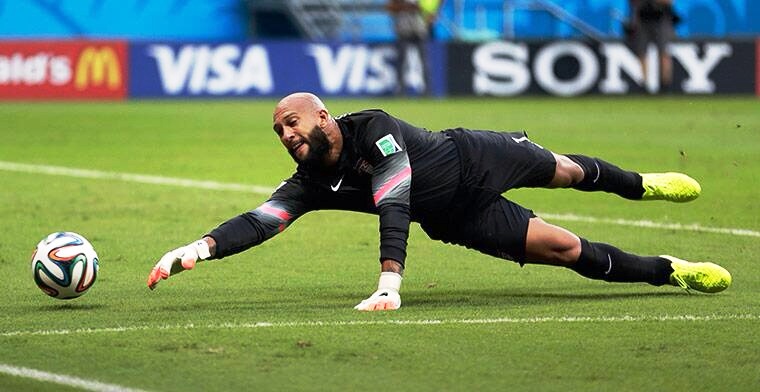
“Did you know there are four players on Team USA who are like me, like us?” I asked; “born in Deutschland of Deutsch Mütter” and (along with a fifth player, whose mother moved him back to Deutschland when a toddler) their fathers were American soldiers of the Occupation.”

Here they’re wearing the USA shield and “they’re performing splendidly”, I said. Naturally unlike me these young men “were kept by their mothers, raised in Deutschland” as Deutschen.

“I suppose these young men are more like you, Jutta. Our mother raised you and Evi” in our hometown; that is, until another G.I. Joe swept her and you away (which I found multiplied my sisters’ trauma).

I hold no animus. It was simply the order of our birth. After them I was the next born in an untenable situation. As Jutti has reminded “there was no food, Max”. At our grandmother’s insistence, I was made eligible for “transfer”, as they say in football. I’m forever grateful, yet it doesn’t sooth deeper pain.

Nearly 30 years later, these players were born in a different Deutschland; born in a more inclusive, integrated world thankfully since they had the added layer of interracial creation. The shared ironies are remarkable for all our lives.

We have many layers, painful layers to peel away from what we inherited with birth for which we had no control. As we struggle to understand each and every layer, we attempt to heal, move forward. This match, life provides no added time for childish regret, frivolous apologies.

“Jutti, I share with these kids a competitive life”, even if at inferior levels and different athletics. I understand them. “I found solace in competition, identity in competition.” I fought through adulterated scars, our heritage’s scars, the taunting and the bullies by competing athletically.

The clock is always running. Intuitively I react without thought.

Now, I realize how terribly Jutta must miss her twin sister, Evi. She was the only one who understood her. “You must have relied on one another” to survive the life handed us.

Our mother was born in a joyless, laborious life. She was a victim of war and youth. She was a child when she had both of you. Then to fall statutory prey again with me, it’s understandable she was unable to deal with compounding betrayals. I’m certain though you brought her joy, pride. I’m so sorry you and Evi had to go through so much pain, as she sought reclamation.

Fortunately I had a forgiving man who became my father. And as with these footballers, though not my blood, I had the compassion and honesty of a sturdy mother to subdue a child’s pain. They didn’t understand the depth of my turmoil yet their unconditional love got me through adolescence, even if without modern coping tools.

With this, sister, I realize we share inner strength. I realize after Evi died your strength derived from the Biblical father you know, as mine from the father figures I knew.

And here, as I watch another World Cup I feel reality slap my face. I share my awkward abandonment with you, sister, and perhaps now with new partners – these youngsters.

Still with much to work out, I’m reminded survival’s in our blood and as I’ve reassured you, “wir sind blut”.

It is our determination and courage that wills us through the trajectory of our life and times, as we try to absolve ourselves while making better lives for our children.

My Mardi Gras

laissez les bons temps rouler

Nawlins Street Tunes

My Mardi Gras ends now, I thought as I stood outside the Omni Hotel. Fat Tuesday was here; the end of Carneval – the final feasting before the fasting of Lent. I had to try it. One time. Now I was hailing a cab to leave New Orleans before sundown.

I’ve lived in the West and the Northeast. Seldom have I heard a person speak of the holiday unless, of course, they were from New Orleans.

Even though America’s a “Christian” nation, to a majority of America’s Christians, Mardi Gras is some pagan debauched orgy. Well they’re right. Mardi Gras is New Orleans on a bender.

I expected it would be loud but what I experienced was exceptionally vociferous. It wasn’t just the University of Georgia Bulldog fellas barking in the elevator; confronted in the lobby by the “CAAAANE swish, swish, wish” of Miami Hurricane frat boys, who were targeted by “SOOEY” pig-calling Arkansas visitors as we all hit the street.

No. It was more than pumped up, drunken Greek geeks and jocks, it was the full throat viciousness of war, more so a victory party brewing before The Gulf War saw a single shot half a world away.

It was a week to rally ‘round the flag floats, boys.  Floats glided down Poydras Street with menacing, sneering, satanic  Saddam Hussein caricatures juxtaposed by a kindly, fatherly – hey, doesn’t that look more like Teddy Roosevelt – George (H.W) Bush big-head floats. One float even had a shirtless Bush flexing. I never knew he had such a physique; replete with a six-pack of abs. Extraordinary artistic license, the patriotism on parade was unlike any I had seen at my father’s military reviews.

Yet, I did see a Robert E. Lee big head float drive under a column topped with a statue of Abe Lincoln. I mean although that War was six score and six years ago, it seemed relevant; militaristic, but in symmetry with tradition and  The South.

But after four days of Bacchanalia, beignets, brass bands, beads, and tap dancing panhandlers, who seemed to know where I got “those shoes”, my friend, Karen and I felt captive to the French Quarter.

It had become claustrophobic, cornered by the Mississippi River, surrounded by the drab, dated metropolis spiking toward the sky.  We needed a quiet escape outside The Quarter. Suddenly, Easy Rider came to mind; that cemetery. We spend quiet afternoons at cemeteries and parks back home in L.A.

I wasn’t’ purposely coy with the cab driver. However when I told him, “turn right off Canal” and mentioned Saint Louis Cemetery, he lit into me. “Ah you ain’t goin’ta Sain Louis, are ya’ll? You should have told me. As he took a premature right turn, he continued “I wouldn’t brought ya’ll here”,

As he took the fare, he reminded, “if anything happens to ya’ll, I didn’t bring ya’ll”, and he sped off, leaving us standing on Rampart Street. We walked a block to the corner, where we spied the whitewash walls of the cemetery.

There stood three black police officers. Their dark uniforms artistically contrasted against that pristine whitewashed cemetery wall.

It  was plainly visible that one officer on a knee was inserting a small-caliber hand gun into a sock holster, while another, who had his foot on a fire hydrant, stuffed a dagger or switch blade in his sock. The other stood fiddling with jacket and pant belt, as they silently secured extra weapons.

As we approached, one police officer shaking his head said aloud, “Ya’ll ain’t going in there.” I replied, “We want to check it out”. He shook his head faster as another said, “Ya’ll know what’s in there, boy?” Before I could reply, he added, “There’s people in there waiting to rob and hurt you”. He steered my gaze back from where we had walked.  “Ya’ll see those? Theys Projects. See them on the balconies watching us? They can see ya’ll down in there. They send boys down to rob you, could stab you.”

Feeling their sincerity and witnessing their patrol preparation, we acted as if heeding their advice, but you know me… Once I saw them leave toward The Quarter, I said, “Let’s turn around.”  I won’t pretend. We were hesitant. At the threshold of the cemetery gate, we tiptoed inside. From a balcony outside the wall, an old woman in her rocker cackled a loud laugh startling us.

stLouis Cemt2

I went down the first row of tombs along the inside wall; that is, until I came upon a pair of legs poking out from behind a tomb. It could be a drunk sleeping but it also could be a victim, vagrant or some trap. I retreated.

As I walked up to Karen at the gate behind her a middle-aged black man appeared. He stood there quietly looking at us. He was nearly six feet tall with a modest, old school afro. He had calm eyes as he stood there in his black slacks with a worn tan sport coat, an old  mustard stain shining from the belly of his dress white shirt. He asked if we were looking for anyone in particular. “No. No one”, I said.

He said, “I know where a lotta folk are” and offered to guide us. As he took us into the maze of tombs, like a Civics lesson, he began talking about historic New Orleans: the peculiar geographic setting – lying between the Mississippi River and Lake Pontchartrain under sea level. They can’t bury the dead. They place the dead in these above ground tombs, sealing them, so as they act like ovens. Bodies putrefy.  Through cracks, we sneaked peaks at disintegrated bones.

He definitely knew his centuries of local history. The slave trade. The immigration patterns. He was proud to show the tomb of the first Postmaster General of New Orleans; then, the first black mayor who began a political dynasty – the Morial Family tomb. We strolled past by favorite pirate – Jean Lafitte’s tomb.

We asked where was the voodoo queen, Marie Laveau’s tomb? There, we found a lot of graffiti, candles and presents. He coached us through a process – three knocks, three twirls in place followed by more knocks, a present, more knocks and twirls, as we tried contacting her to grant a wish.

There were colossal tombs that he explained were made by the first Italian emigrants, who created “Benevolent Societies” – the original American gangsters. They sold protection or as he called it “insurance”. If you paid them, your family was treated well and it guaranteed burial inside these mausoleum type tombs. He added some people who didn’t pay might make it as well; that, they may not have been dead when they were entombed. “People say they heard screaming awhile in the night. After a week or so it went quiet”.

He didn’t laugh or ever change expression throughout the tour.  We sat on a tomb to take in the graveyard framed by the skyline. I broached the subject of this Mardi Gras with its war theme. I asked if it was unusual. He dropped his head. He hadn’t seen it like this.  He likewise didn’t quite understand why the various Krewes had made such floats but he knew the mentality.

stLouis Cemt3

He had fought in Vietnam, lost family in Vietnam. Mardi Gras had never been the same when he returned. The “live and let live” spirit of his ancestry dampened, if not lost, as he quietly hoped it would be different for a son, who was now in Kuwait awaiting a new war. As we stood to walk out of the maze, his concern was etched on his face.

As we got near the entrance, I turned to Karen, mumbling that we should give him some money. When I turned back, he was gone. As quickly as he appeared, he had vanished.

I looked down both ends of the street. We didn’t get to say thank you. Perplexed, we began to consider if he had even been real; was he a ghost, an angel, our guardian angel perhaps. Was he some validation of our last four days here? Was he a hallucination, as if we just had a parallel Easy Rider scene?

He was so calm, unfettered about his and this City’s past yet weary. I was still thinking of him the next day, as the cab drove us to the airport.  I considered that he was “killed-in-action”, if not in body in spirit. When we got back to L.A. we wondered if we had captured his image in of our photographs but he had kept removed, always a distance back for whatever reason.

We found one but he was split in half. I thought it fitting that he was only partially there in body. He had a divine, near Jesus-like spirit and although I was leaving Mardi Gras, he would never leave me.

stLouis Cemt

Category 5

As a friend’s birth date passes, I celebrate him by re-publishing this edited piece? He was one of a kind. He ran with gangsters in the east and from the cops all the way out west. He was no gunslinger. He was a friend to Medicine Men, patron of “humans”. He was a “knight of the road” in his wagon filled with folksy, street wisdom and charade. He saw clearly into the future yet didn’t have enough time to accomplish the tasks that his ambition craved. But to be with Ralphy, it was the ride of your life.

Ralhpy

Category 5

Happy Birthday, Ralphy. Thought about you all day but, I think about you all the time.

The life you breathed into our lungs. The dizziness that we felt as we followed your anecdotes and schemes. You made craziness seem real. The real you made crazy. And now, it’s twelve years since we hugged that last time in that dream.

After running along the mountainside, as we did in life, I knew it was the final hug; that, tight, oddly conscious, yet perfectly inevitable feeling, then we walked to that ridge and sat at the edge of the other side. Our legs playfully swung like restless children fishing on a pier. Our legs dangled over an indefinable universe; that, near-blinding, vast opulent glow of infinity. It was brighter than any imagined or humanly seen.

Saturn spun below. Jupiter towered before us. Planets hung harmlessly with stars shooting around the silent nothingness into a dark vanishing point of galaxies.

In that comforting silence, hardly could we know where you were heading. Had you brought me along to lean upon before that unknown? No matter, thank you for taking me there.

è stato il più magificent addio. A magnificent goodbye; that, which mortals nor heaven could ever contrive. Incorruptible. Supernatural.

As I drove silently for hours to your memorial my ears rang a piercing repeated riff.  As I listened closer then and later, as if you whispered it in my ear, it was “Like A Hurricane” .

Had it all come clearer to you, because it answered much for those who could never understand. You were a dreamer and time had just slipped away before you could harness a reality from the power of dreams. In the end, you were susceptible to nature.

As the drums beat and your tribe sang, my vision blurred. My throat choked close. I am sorry if I failed. If I failed when I couldn’t relate this experience to those who gathered; those, who loved you. I was paralyzed by the experience, stupefied by the love. All of us, your children.

Overwhelmed, I couldn’t speak of what we shared in that quixotic visit. The path before you; that, unknown path shared with me. It was simply all too much. It may have been too much for them but, that defined you.

We were just children. Susceptible. You blew into our lives. There was a calm in your eyes as you spoke madness. The swirl of your mouth as that smile grew with the insanity of each word you spoke. We wanted to love you but we were always getting blown away.

On our last earthly, mortal moment, I told you, “I’ll see yay sooner… than later” but as in life you beat me to it and so we parted on your terms in a beautiful dream.

You blew me away one last time. ti amo, Ralphy!

Winter Wonderland

image

For my brother-in-law, @MikeBarre who, upon reading my essay, “Autumn Alchemy” looked forward in his enviable New England sense of irony to my next piece, “30 below knee deep in the driveway shoveling” snow. I hope that I haven’t let him down here and apologize for not only subordinating his crafty title to subtitle but for the tardy production. It took a second polar vortex to stimulate.

Winter Wonderland

I’ve been a sleep ten hours. Ten long hours maybe more yet, it feels like twenty-four in winter.

Exhaustion will do that. Winter will do that. It fools you like a Saharan summer – stark, dry, endless.

During another long dark night a new storm brewed. In my sleep I heard the wind as the storm strengthened. It’s no sixth sense. I hear the toll of my Maine wind bells and chimes; their noise sharp in the dead winter silence.

Suddenly, a crash; a clamor that in another season would’ve opened my eyes, raised my head, stirred me to investigate but not tonight because I know my perimeter. It’s securely hazardous, void of life.

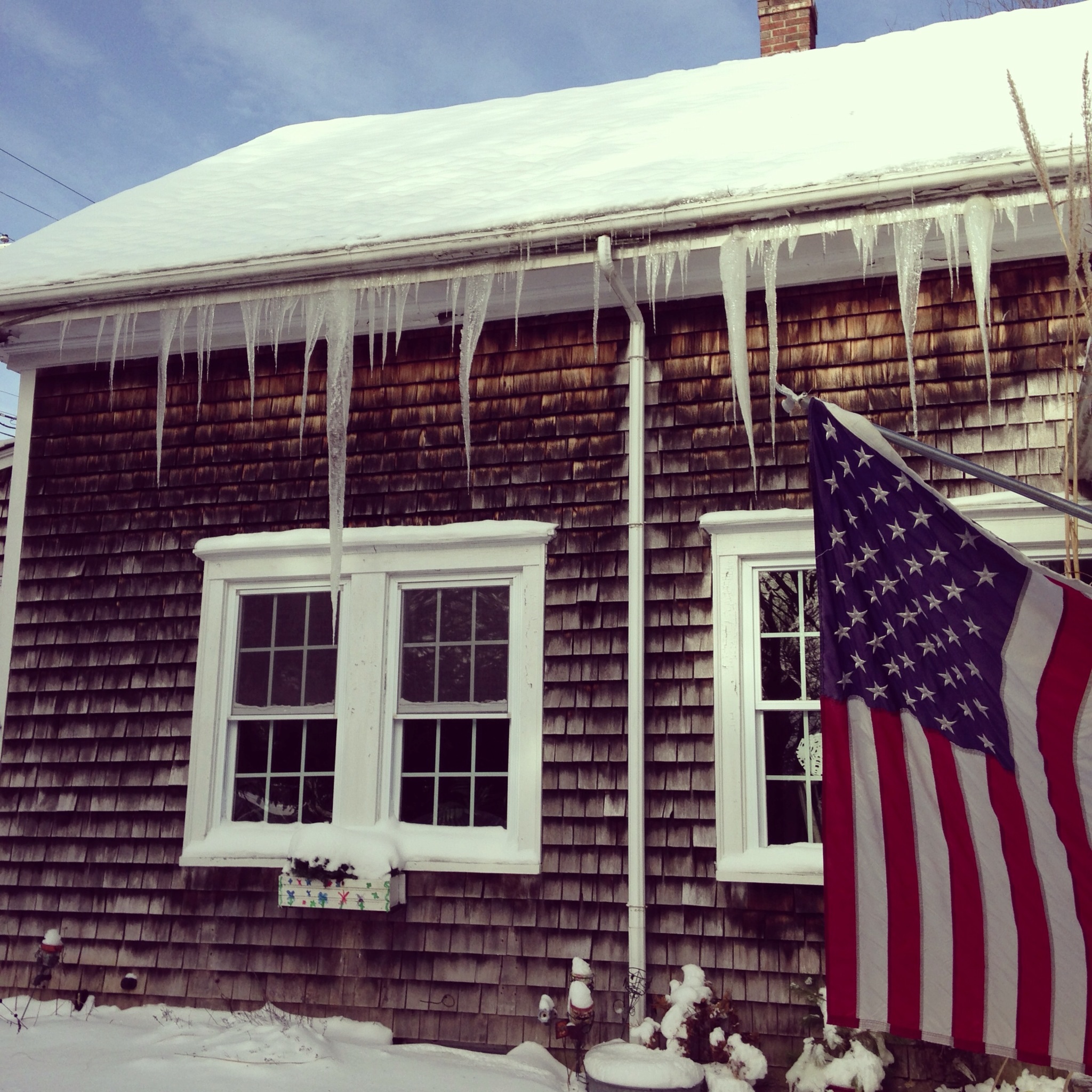
The three foot long, half foot thick icicles that formed from the melting snow of my roof yesterday have snapped from the broken wooden gutters; crashing off the walls to the icy snow covered ground.

It’s a sharp racket. It stings the ears, stirs hibernation but I can’t move. In my trance I feel the next sharp audible snap is closer. It’s the framework of this old house resisting the blow from a tremendous wind gust that tries to tear it from its fieldstone foundation. Sharp racket squared but, my eyes will not open.

It’s not my eyes, it’s my body. It’s a fatigue and unless the roof caves in on my upstairs coffin of a bed, there’s no impetus to move. Yet, stirred, I try to squeeze my hands, raise my arms, and bend my knees upward, toward the ceiling. As I fail, I attempt to bend my knees – meeting my heels and toes. With every motion my rigid muscles radiate anguish, my brain sends a message to retreat and seek another option. I roll to one side.

There on my left shoulder, I feel close to the edge of the bed. I don’t need to see it. It’s a sense; a feel like a parched mouth that salivates at a whiff of water when one is at the edge of an oasis. Pain is distracted by goals, even a goal as simple as falling out of this bed.

Pain also has a memory and I now recall yesterday in the pulsating ache of my palms. There was a goal that needed achieved. Coming from my coma, I recall that I had to remove that translucent, thick glaze of ice from the concrete steps that lead into my wooden oasis, my house.

The heat of the attic; that, expensive gas heat that keeps my oasis from freezing, it escapes to the attic, warming mice and melting inches of snow from the roof. The melt runs down the shingles momentarily escaping the inevitable death freeze as it rolls off the roof. And, in dry, frozen air, the water loses the race, congealing into an elongated spike; that, suspends in time, agonizingly suspended in what seems dead time.

However a few fortunate atoms make it to earth, dripping along the backs of those less fortunate, they explode into a microcosmic molecular splash of freedom. Momentarily atoms split, joining the spare oxygen. They all gasp in the bad company of each other in a violent dripping explosion on concrete. It resembles a translucent blood splatter. Then, it reforms into deadly ice upon my door steps.

Science is treacherous. I’m confident that it must minimize most of life’s enjoyment to a scintilla.

But for now, it has created a cruel invisible prank at my door – a bilateral trick that lies in wait no matter ones direction. A bobby trap as one escapes the dead chill outside or the toasty, parched atmosphere inside.

I indict winter for maliciousness. I hold more than icy doorsteps as evidence. I present my plant life as well. They die inside or out. The difference simply lies in the process; that is, death is quicker outside than inside. Nature asks, “Which would you prefer?”

Naturally humans are sturdier, reasoned and nature knows it. I’m reminded by the reflection of my ghostly image in the window as I look out upon the science brewing at my doorstep. But for the drip, drip, drip falling before my eyes, the steps are stealthily glaciated, encased for the season’s annual dance sensation – the quick slip. The slip that breaks a wrist or ankle, strains a back, cracks a skull or worse, a lawsuit.

Thus I reasoned with nature, claw hammer in hand, I beat the shit out of that ice. I took the whole frustrating pent up polar vortex out on that goddamn ice. With every swing I felt the ice fight back in stinging shards that rocketed off my face, legs, and hands. It was no match though for my fury.

I beat the shit out of it right then and there. Groceries tossed in the front yard snow, the orange juice, creamer, milk and bacon watched my fury. The window flower boxes of frozen over Christmas pine cones and branches stared quietly at my joy in each angry swing. That’s right I had a goal and now my hands paid for achieving it.

They say misery loves company. Well my back and legs join in that woeful celebration. They vibrate with ache from achieving freedom for my wife’s car from a driveway of snow. The pulsating twinge reminds me of each and every shovel stroke, as I stooped an hour clearing the driveway. It all resonates now through my brain as I lay here on my side.

I might have slept longer sure. But it was neither the snapping icicles nor the crack of the house’s framework at fault. No, it was the fear and anger of dreams tearing me from sleep and back to reality.

The imaginary request of some invisible boss to work on a door entry to a commercial building filled with the working poor, who fill floor after floor of office space and anonymous cubicles. They needed to get through that doorway and up to their daytime dungeons.

Did I ask myself in this contrived dream why I was laboring like a maintenance man when I have little skill in such endeavor? No, it was a fucking dream. It was an anxiety driven fucking dream of an often inept and bullied childhood smashing into the present of my life’s winter maturation which is stamped with some expiration date.

As I often do, I felt a different pain in my slumber. As I gazed up curious to see why I felt annoyance, I saw office workers tossing ice cubes down at me as I knelt at the doorway fiddling with some stripping, some monotonous repairs.

They’re the working poor bullies picking on the working poor slob, me. I’ve lived this scene in a sense. However instead of a lit string of firecrackers laid across my sleeping body in the work truck of my youth, these are imaginary hellions hurling ice from their three story heights of momentary supremacy.

Ice cubes are then followed by bucket after bucket of ice tumbling from the windows; torturous, gleeful faces peek from behind the buckets, as they plummet toward my face.

I snap to my feet to recognize and remember those faces which I will obliterate when I … wake up in the confused anger of my dark bedroom, gray steel snow sky glaring that excruciating glare through the drapes.

My eyes are slits but I recognize the faint white dancing dust, its snow. Within the time my eyes can open, the playful, teasing dance of snow has accelerated to a freefall.

What a cruel alarm clock. My knees painfully catch my roll from the heights of my bed to the red pine floor below. My brain had a goal and my legs, my arms; my body complied in the nick of time.

On my feet, my senses carry me downstairs to that drink of water, smell of coffee and taste of fig preserves. I’m living on coffee, fig preserves, and the fury that this season brings as I pursue survival or die trying each and every day. Now who dare say that I’m not goal oriented?

Bastards of Young

Meeting Jutta in NYC

I wrote this in June 2007. It has become the basis of a work in progress to be titled later… many friends know the story. They have provided such support and kindness after reading previous versions. It’s perhaps the foreword for subsequent chapters – some posted here on the WordPress such as “My Father’s Bible”. As I edit “Bastards of Young” again, I realize how quickly seven years have passed. Seven years of further discovery, I fought off however the urge to update or spoil this extraordinary life event with the knowledge that has since come over these years.

My wife had an Oracle Conference to attend in Orlando last month. Since her flight and the hotel tab was on her employer, she suggested the kids and I grab some tickets, tag along. We could enjoy some Disney World magic.  Since we had never been, I thought it a great idea.

I’m old school. I watched the magician himself, Walt Disney as he’d previewed his weekly show. As a nation, we all watched every Sunday night.

I even remember his big buy – some Florida swamp on the cheap. Before some shows, through the smoke of his filterless cigarettes, he’d display drawings, detailed plans for the bigger, better magic kingdom; that is, before the Big C caught up with him. It seems so long ago now.

Since I was raised in Southern California in the 1960s, I’m a part of a generation who “knew” the O.G. of the O.C. I’d been to Disneyland on a few occasions – once as a kid with my parents for the trip of our lifetime and once on Microdot and “mersh” for the anti-trip of a teenage life.  It was called “Grad Night” as in high school graduation night in which only graduating seniors can attend.

I may have gone twice more as a young adult when we’d conceal vodka in baby bottles, tuck the colored dreads up in a hat, bring a change of clothes, remove visible piercings, since in the 1980s Disney Park Management didn’t appreciate counter-cultures even if paying admission. It wasn’t wholesome; as if Grad Nights were Pat Boone and Debbie Reynolds running hand-in-hand, mouths open, eyes wide looking for the soda fountain.

Yep. This would be different; a different time. a different century. a different Disney; a different life in all respects. While my wife, Kim worked, I’d brave the parks with my two little girls. We’d rendezvous later.

Under a hot March sun we were in “Dinoland”.  My eldest daughter, Violette was complaining that “there are no bones, Dad” since she’d looked forward to dig for dinosaur bones. You see, she hopes to study science. Her seriousness is very familiar, not lost upon me. She was right. There were only slides, small water slides, a roped jungle gym and sand. But, with a nonverbal shrug, palms to the air, I intimated what are you gonna do?

On the other hand, my youngest, Lily had enough. She was hot, her clothes wet. She was in full throat, two-year old tantrum mode and she didn’t appreciate my obtuse indifference to her suffering. She flopped on the ground like a fish out of water. It’s moments like this that I question my idealistic image of fatherhood; if not the participation, my execution of the lofty ideal (boy, wish I had that vodka from 1986 now). Well, it’s not the first tantrum and won’t be the last, I thought.

At that moment my mobile phone rings. I glance at caller ID – 714 area code. Hmm, Orange County? Second ring. I dunno anyone behind “the Orange Curtain but”… third ring; a call from my Disneyland? A fourth ring. Oh I hate sales calls. (But anything will beat this scene so), I answered it with a smiley, helpful voice. Hell (it might mean money) O!

Nope. It’s a quivering, crying woman on the line. All right, you just had to answer it. She asks if I am who I am? So, I repeat “this is Max; how can I help you?”  Through sobs, she asks a question that halts all time and space. “Does Menges mean anything to you?”

Yeeeesss “that’s my German birth family name”, I told her. Quickly, turning on a dime, she transitions to, “Where were you born?” Okay, I’ll play this game. Upping the ante, in German I reply, “34 Gartner Strasse, Pirmasens, Deutschland”. Now she cries heavier as it becomes clear to me that after 30 some years of searching, a lifetime of wondering, it’s finally happening.

I felt a smile growing across my face. For no particular reason I looked into the sky as I listened to the sobs.  Could my life’s mystery ultimately be coming to a conclusion?

The crying voice awkwardly offers the cliché punch line – “I hate to tell you like this but”… time momentarily freezes as I reassure myself…  your parents are dead. my children are at my feet. my wife’s in a conference room. There’s nothing that bad but isn’t this how people tell yay about the death of a relative?”… “I think, I’m your sister”, she concludes.

I heaved a heavy breath (although she recalls I did after she asked the first question but it won’t be our last point of contention). I ask her name? Stuttering, “iiiit’s Juuudy, but I was born Jutta”. “Jutta,” I said.  She repeats it and so did I – several times. “Hello Jutta, I’ve been looking for you all my life.”

At this point in my life, I was resigned to the fact that my maternal mother would take our secret to her grave; that, it was impossible for her to tell those who came thereafter that she gave birth to a baby and had given him up. She had just turned 19 years old, had a lifetime ahead. A new man might not want to know more than what was evident – twin daughters whom she had at 16 years old.  Yes, it’s complicated but not that bad. They’re girls. But another – a third child… a boy?

Then, once you’re in it, you’re in it.  It’d be a tough act to say later one day, you know I’ve been meaning to tell you… before I met you…  What a terrible feeling it must be always wondering when a knock at the door might be that secret coming home to roost.

I wouldn’t ruin it, not me. Who would? I was given to salt of the earth people, an American Army Sergeant and his wife. You kidding? Coming out, I rolled 7/11. CRAPS! WINNER!! Better than any lotto. I won the Life Lotto.

As soon as I could understand (probably sooner) my mother shared the entire trauma of that evening… repeatedly. No fear of dysfunction, emotional scars, she loved reciting it. It was “the easiest childbirth” she’d had.

She would recall, “they brought you out from the bedroom holding you upside down by the ankles, naked, like a chunk of ham”. After reassurances from my prospective father, my mother confirmed through the interpreter, “if we’re to have a son, he’s the one…” In the din of crying (how’d Jutta sleep through that?), she remembered our mother saying one thing in English – “give him a chance in Amerika“. They walked out the door with me.

Since the only German my mother knew was “wieviel” – how much, I’m happy she didn’t ask because days after the handoff, a neighborhood “good German” reported to the authorities that there was a baby boy born in that house but he’s no longer there (implying I was sold).

From then on, except for silent bedtime hopes that she thought about me, I wished especially on her and my birthdays, she was happy. I accepted that my birth mother had moved on. Yet, perhaps in a German sense of duty, I always wanted to let her know how well it turned out, even if I was the forgotten boy.

I passively began to seek her out in the 1980s, became more aggressive in the 1990s – posting classified ads in local hometown newspapers. Finally a last shot in early 2000 with a day license on an Internet people search engine. This last try got me close but now, here in the Magic Kingdom, it was all finally coming to conclusion.

My sister, Jutta had discovered that Internet posting that I wrote on our hometown’s new website in 2000. She had recently got an Apple notebook and was new to the ether of the ‘Net. She found our mother’s brother, Helmut and a cousin, Petr.  When she found our hometown’s website… OH MY GOD! She “prayed on it for six days.” Her husband offered to hire a private investigator.

I asked Jutta of her twin, my other sister. “What’s her name? Where is she?” Jutta explained how Evi, our sister had tragically died in 2002 of a viral heart infection at 46 years old. “And our mother?” I asked. She had died in November 2005. I was batting .333 – a nice batting average but rotten when it comes to living blood relatives. But I had Jutta.

I asked “where are you with a 714 area code?” She says “Huntington Beach.” I spat, “HUNTINGTON BEACH! How long?” She replied, “for nearly 20 years on PCH.” I’ve walked past your house.  Oh my god, I’ve stayed at the Marriott next door. They were less than 45 minutes from my front door! I was that close!

In 2000, I’d confirmed from our hometown’s city hall that our mother left Pirmasens in 1965 with a “Sgt George”. She’d finally landed a G.I. free to marry, since whoever the G.Is were that fathered Jutta and I ditched our pregnant teenage mother for their wives and kids stateside. They were lucky they weren’t brought up on statutory rape. However, she finally got out of her mother’s house and had taken my sisters to America when they were almost 10 years old.

Apologetic for our mother, Jutta exclaimed “Max, there was no food”. She explained that they lived in a one bedroom house with “Oma” (German: grandmother) and her drunken second husband, Regal. Our mother worked two jobs with Oma,  at the shoe factories – our hometown’s famed for shoes. Her stepfather, Regal, stole their wages and went out drinking all night. He’d toss a loaf of bread and cheese on the table as he left.

The blessing of being given away 47 years ago were now confirmed in my left ear.

As Jutta described her stepfather – this third G.I in our mother’s life – as an abusive, torturing, neglectful, ugly man. Once they came to America, he demanded no German spoken in his house, even if it was the only language they knew. He changed their names – Jutta became Judy and Evi became Edith. He made them shovel coal into the basement boiler and even abandoned them for an entire year tour in Vietnam never sending money or a note.

The stature of my soldier dad grew greater. He quit his Army because he could not bring his dependents to Vietnam. At so many levels, how could these two American Army sergeants be so entirely different?

Upon his return, Jutta recalled his stares, molestation of our sister, they alternated sleep to guard against his entry to their bedroom. He threatened them with his revolver to their faces if they ever told our mother.  I apologized and swore never to call her by her “slave name.” You’re Jutta.

With the single ring of a phone, my life’s blessings, the answers to many questions, they all crashed down with such immediacy that the weight caused me to sit on a park bench. In fact these answers created more questions for my poor sister. The universe turned upside down.

As my wife approached, my face betrayed the hour-long vortex whirling through my mind. My face was unlike she’d ever seen. “What was wrong?” she lipped silently to me.

My heart raced. My head spun. My anger swelled as memories of my simple life flashed and an unconditional love grew for my sister. This was my sister. I am her little brother. It felt right even though it was barely 60 minutes new.

Her grief continued to pour forth since our mother never mentioned my birth. “We were only 16 years apart, Max. We were more like friends than mother and daughter”, Jutta said. The time lost; that, these years could’ve been spent together. “I always wanted a little brother, she cried”. Her guilt to have not protected me as she had Avi and two other little sisters as they struggled for food, attention, love.

“I can’t believe this, Max”, she continued. Whoa, whoa, whoa, back up. What? There are “more sisters?” How naive. I never contemplated this possibility. Of course, our mother would’ve bore more children. What was I thinking; that, she’d stop at 19 with me? She had a husband. She made a family with him.

I asked about these other sisters. Nonchalantly Jutta says, “Charlene’s in Arkansas” and she didn’t know where “Diane” was: “she’s on drugs”. Oh! At least I have something to relate to one of them… other than a mother, of course. My god, I have two more half sisters. This is more than what I had ever assumed.

The vernacular was tricky enough, as I delineated between my mother from our mother. Now I have additional sisters in a three-dimensional, post-war dysfunctional life smorgasbord. There was however no term confusion with my father and “Chuck”, the stepfather from hell.

The conversation rambled until Jutta inquired “don’t you wanna know who our fathers are?”. “No!” I spat. Without conscious, I said “they were just dicks that got want they wanted and didn’t care to hang around”… Whoa.

I just speak frankly to my sister. I’d always held back with my mother’s two children, who were generations older than me, from another marriage. I felt oddly comfortable. I continued that “it doesn’t matter who they are.  They got what they wanted but wir sind blut” (German: we are blood), I said.  We are born of our mother, not our fathers, I concluded.

Surprisingly unoffended, she went on to explain that her husband had doubts about my authenticity, which is funny since that’s been an ongoing theme in my life.  However she knew that in a small city, there was “only one Erika Menges”. She spent days deliberating, no “prayed” on this news. How could he not only know her name but that she had twin daughters? “It must be true”, she told Kevin, her husband.

Thankfully I’ve carried my official papers and German passport throughout my life. I knew our mother’s name, her birthdate, the address of our house, where we were all born.

However, more important than paperwork, my mother’s intuition answered many questions that Jutta had wondered years.  Why our mother did not speak to Oma (grandmother) for nearly 30 years after immigrating to the States. Why our mother doted on her son, Eric’s best friend, Max when he visited. She asked, “Did she know you’re name was Max?” Why our mother wanted a computer after Jutta used one to find Unkel Helmut and Cousin Petr.

The epiphanies were many and hard for Jutta and for nearly a month after this first call, she called with new revelations, often repetitively and for hours. “It must’ve been Oma, Max! She made Mom give you up!”

I’d simply say, “I know, Jutta”.  “No! Max, it was her. Mom would’ve worked three jobs to keep you.” I assured her, “Jutta, I do not doubt it”.

My mother was keen to what was happening that first night. I’ve had my whole life to make peace with it. However, it’s all new, crashing upon schwester Jutti.  As hard as it is not to look back, we have to look forward (but “could you get a Verizon phone”, I asked “because you’re killing my minutes”).

Within three months we met in Manhattan. It was bittersweet. To meet in middle age certainly was regretful yet, it was really because of Evi’s absence. When I saw Jutta she was nervously posed on the lobby couch of The Lucerne Hotel. As she rose, I saw no visible resemblance except our broad shoulders, strong stature. We hugged for a considerable time. I whispered for her to feel Evi with us; feel her arms around us. I spoke Evi’s name out loud hoping to call her spirit into this overdue embrace.

With our spouses, we went to their room. As she gave my daughters gifts, I suddenly thought – bubbly. We must toast the moment. Under the guise of feeding a parking meter, I excused myself and ran across West 79th Street to a package store.

I returned with the champagne surprise to find that she and Kevin “don’t really drink”.  Oh? There’s gonna be a lot to get used to, I guess, uh? Kindly they shared a glass, a toast for this special moment.

A moment that I never thought would happen. Then again as I hung up from that emotional, awkward first call, I considered where I was. The Magic Kingdom. It was a natural setting because… when you wish upon a star, it makes no difference who you are…
My Father’s Bible

Japan 1956 Japan 1956

I opened my father’s Bible. It was difficult at so many levels but I’ve neglected it for two decades, since he faded away from this world.

With his seven siblings gone as well, this is the remaining item where I can find hint, a clue, some trail to his thoughts, his motivations, hopefully none of his ghosts.

Like his father, he lost his mind to dementia. It all slipped away. Too fast. Too young. He lost it as I sat helplessly by him in the “homes”. Everything faded. He left nothing, not a trace, even though he blazed a trail half way around the world and back in the most historic of American times.

Well, he left a cardboard box with a pair of boots, a cardigan, couple bolo ties, some eye glasses, a transistor radio and silly piggybanks like this plastic Dachshund on my desk. The dog’s tongue lays out for a coin. If the tail is stroked, the tongue rolls the coin into the Dachshund. He loved chotsky piggybanks. A simple man.

He loved sucking on mints while listening to that Philco radio sitting by his side on a desk. This Philco kept him company. The piggybank made him laugh. The mints kept his mouth moving. A simple man, who had seen horrors of two wars.

There were “sup hose” or whatever mother called those socks he wore after his varicose veins were removed from damaged ankles. Varicose veins ran in his mother’s family. Dementia was the gift from his father’s side.

Me? I have no link. I’m from some other family, who had no food to feed another mouth in the Germany my father conquered.

I’m the one my father chose though to give his name. The one his mother asked, “How can you give a stranger our name?” I’m the round peg that doesn’t fit this square link, yet I will try piecing the crumbs of his trail together to fashion some idea of mine; to answer those nagging questions. Why am I uncomfortable with this life; my life without links. I should be happy not stuck in a Fassbinder movie.

Everyone that I ever met, they seem to have links. Void of any, I am the one to ingratiate myself upon others for any relevance or reward; that is, until I made my own family.

I will continue to piece together my existence, inspiration, pathos through his unwitting, immeasurable love.

I would like to preserve what is left of this life to perhaps help the others – the adopted sons and daughters who have grappled with their existences; the how and why; that is, to convey that so, so much is beyond our control and assure them what is in our control; what, we can embrace, own, overcome, find comfort and in the end a peace.

Mind you, my father was not a religious man.

Perhaps, as they say, he found religion in a foxhole, somewhere on Normandy, in the Ardennes, along the Yalu River.

However, he never formerly or even tacitly embraced any religion, though his dog tags were engraved, “Protestant.”

I can count on one hand the number of times he joined my mother on a Sunday at church. (Famously he got me out of the indoctrination after just a few visits to bible school. It was an October Sunday morning as Game 5 of the 1968 World Series loomed. As my mother urged me to prepare, he said,” he doesn’t wanna go to church. He wants to watch the ballgame with me.” Thank you, Dad. Thank you.)

He was the eldest of eight born in Welland, Ontario, Canada to a less than religious, tormenting Victorian woman of Scot-Anglo decent. She wasn’t even sure of his birth date.

She was visiting her family when she broke water, gave birth, brought him back undocumented to Utica, later Nazareth and other Pennsylvania towns as her family grew.

I know these two things: like me, he went undocumented for years and he didn’t really have a “hometown”. We were in that alone.

He didn’t have a high school education. The Depression was his education and a pool room, his school house. His military career started at 21 years old. Those experiences dwarfed any issues his mother, Madeline Pudge consecrated upon him or his siblings. His siblings called him “Bud”. How American.

I’ve wondered if he was his siblings’ “pillar”; the strong quiet type always there whenever needed. Bud. With crystal blue eyes, Bud had that All-American, big brother, Gary Cooper stature but then he went away to war, where he enjoyed English darts and lasses until that foggy summer morning when he crawled up a French beach in the horror.

When he returned home in May 1946, he found his mother and first wife spent all the money he had sent home to save for his return.

After a brief pursuit of his wife, side-arm in hand, murder on his mind, his father talked him down. He stayed in the safety of his Army family.

I’ve wondered if he felt betrayed. We could share that experience. Perhaps we shared abandonment by mothers as well. It could explain the bond he sought with his boy.

The Army sent him to occupied Japan; There he promoted but was in a forgivable position for what transpired in 1950: another war, Korea.

After a year of marching the length of Korea and back, he returned State-side long enough to marry my mother in 1951 then back to Japan. By Valentine’s Day 1959 they set sail together for Occupied Germany. My Imperial Father.

It was the three of us and he knew if it made his wife happy, a quotient of stability that he’d never experienced, he appeased his wife and her burgeoning Christian faith, once Stateside.

Honestly she was so aggresive in her conversion, he may have been suffocated by her unrelenting full court, born-again press; that, dogma, absolutism of God’s existence, the Rapture, the stick and carrot of eternal death or (after)life for a man who saw death for breakfast, lunch and dinner.

It offered no quarter, no moderation. It was total surrender to Jesus and his biggest cheerleader yet like war he knew how to duck, dig a deep hole and deflect. Interestingly I’ve been accused of such tactics.

As I open his Bible, it is inscribed with handwritten note: presented to “my beloved husband & dad with loving concern from Dorothy.”(She inserted me, a child for added guilt). It was dated September 22, 1966. That was his 44th birthday… maybe.

On his birthday, as he embarked on a new life, she offers “concern”. What a lovely idea for a man who walked around tank flattened, eviscerated, and burnt corpses. He killed and laid with the dying.

Why could be possibly be concerned about now?

He’s been a civilian for nine months. He had to make a living. She offered a bible.

As I begin to turn some pages, I see only dates in 1979, when he read passages. I randomly accelerate my search, flipping through the margins, I see red ink in The Revelation (of Saint John the Devine).

Somewhat illegible, he’s written a comment… “and thy word of God is like a Sword.” It is understandable for a soldier who has been nurtured by an environment of total war. As I flip the pages further, I see in fading red ink he’s written “redemption” again and again.

Were the passages redemptive? Redemptive of a torment far worse than his mother inflicted? Was I any part of his redemption, as he saved an unwanted German baby. I read no other clues to the redemption that compelled to him.

He repeatedly voiced to me that he knew he would not live long; that, “[veterans] like me are dying fast.” Yet he rejected the invitation to return to Normandy on the 40th anniversary of D-Day.

Upon his passing the minister asked, what was his favorite verse? Mother could quote the whole King James rewrite, so I interjected quickly, “He knew Psalms”, as all Soldiers know: Yea, though I walk through the valley of the shadow of death, I will fear no evil: for thou art with me; thy rod and thy staff they comfort me.

His comrades gathered in pre-battle prayer. He recognized it through these events. Indeed he highlighted it in his Bible. He connected.

It was a natural connection from the sounds of war that still rang in his ears.

I became resigned at that moment to the fact, I will not find any revelation here. It is a fools errand looking to dissect further any of his scribbling. In fact this essay gave me more revelations than his writings in the margin of his “gift”.

I close his Bible and will forever allow it to lie like him in silent peace. I hope he is in a garage where he was most confident and comfortable.

Sarge and Mr Saki 06221954

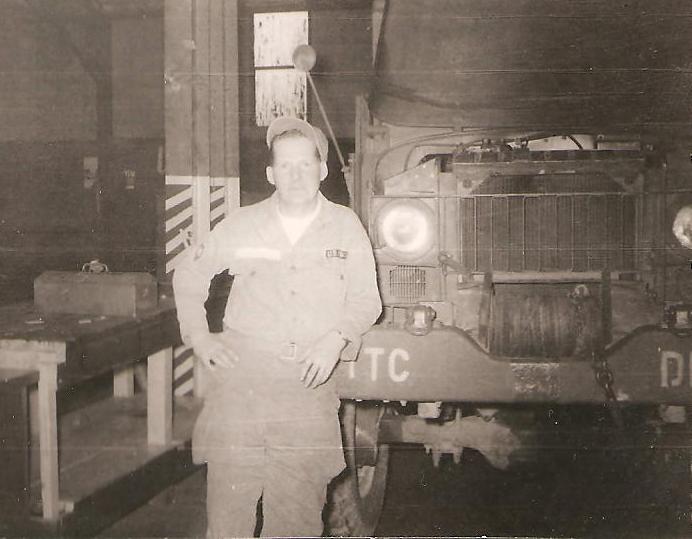
He was Sarge of the “motor pool”. I suppose whatever was under that hangar roof… was his. He loved keeping the “Caisson” rolling.

And in return he, then we kept on moving, moving, and moving.

This was my childhood, perpetual motion; a few months here, a few months there, a year or two now and then, just enough time to meet a friend, join a team, say goodbye. I had seven schools and nine puppies before I ended grade school and walked into a new (Middle) school, my eighth. It was not a textbook approach to provide the adopted bastard child stability

As I roll down the Interstate silently in the middle of the night in the middle age of my life, I often hear the hum of my tires play my father’s favorite tune. I hear him sing his song… over hill over dale, we will hit the dusty trail… and the Caisson keeps rolling along

At the end of his life, silent, staring, incontinent, strapped in a wheelchair, he would be wheeled out into the courtyard of a Santa Monica Convalescent Home for our daily lunchtime “visit”.

I would sing that song quietly in his left ear. It reached far into the darkness. He felt it. His foot tapped. His eye lids blinked. This time I moved him. No. It moved him, as he moved me – from a bad place to a good place and that should be enough for survivors like us.

So Bored

It’s Monday morning, a little more than a week from Christmas and an end to another year.

Since it is an early bitter winter, I turn on the television to gauge the amount of snow for the week ahead.

Instead of the obligatory, nightgowned hot weather woman, there’s Michael Bublé singing a fucking Christmas song that doesn’t need recorded or performed again this Millennium.

With his hands dug deeply into his pant’s pockets, even he seems not to believe his own bullshit… “it’s beginning to look a lot like Christmas…” he’s the closest heartbeat networks can run up to replace Bing?

The moment recalls my weekend.

“If I hear ‘I Saw Mommy Kissing Santa Claus’ or any other Christmas song again, I’m gonna stick a fork in my eyes”.

“I tried watching ‘White Christmas’ yesterday and I just cannot get through five minutes.” Nobody is like that anymore. I watch those ladies sing and dance and there just are not people like that. Corny. Sweet. Sincere.

“I didn’t even put half of my ornaments on the tree” but you know “while I was hanging the ornaments today, I wanted to stop and throw the whole thing out the window.” It’s simply the same thing over and over, again and again, year after year.

I guess I’m just so bored with it. It’s been turned into something so contrary… what made it special.

“Nothing’s special anymore.”

And that was just my wife talking last night. I don’t even know where to begin with my thoughts.

Ode to Silence

… so before the recent snow fell, I had a late night experience of celestial solitutde (if you’re unfamilar, snow adds another layer to silence). it’s easy to embrace when you’re the father of grade school girls who cannot stop talking yet it was sincerely deeper than that. I coyly posted in social schizo media that “silence was awesome”, when in reality I had wrote a quick essay on the subject. However, ater a few friends reminded me that John Cage beat me to the silence vibe decades ago, I let my words rest in – ahh silent deference to my insecurities moreso than any respect to Cage’s clever art; that is, until I subsequently repeated a belief that “the limits of one’s language are the limits of one’s world” for which an esteemed friend countered that thesis by declaring that one receives most of their information “without language”. Hmmm, the Cave Man cum BF Skinner argument. I could embrace it but dwelled on the simple ideal of fire. Left without language, the cave man learns of fire and utilizes it intuitively. Yes, he enjoys it but without words, does he fully expand and appreciate it beyond some utilitiarian, base instinct. As other wicked, more ridiculous examples raced to mind, I thought of my “Ode to Silence” essay. Though self conscious – I’m no Thoreau, I reflected that this essay on silence is demonstrative that through language, I express a deeper organic understanding to the sensation and holistic experience of silence than intuitively experienced without language… but what the fuck do I know?

image

Ode to Silence

In the grasp of silence, all that is life is magnified; that, which is, at its core, essential.

All else is superfluous. All else vanishes revealing a biorhythmic base, our organic foundation.

I revel in silence – its peace; its power; its preciousness. Intentionally or unintentionally, for industriousness, technology or art, good or bad, we have forced silence from our lives. It’s a lethal lose.

The din accelerates. I fear the crescendo. The clamor seems indefatigable as it crashes upon us, festers inside us. It diverts our destiny, separates us from earth and steadily from one another.

It’s a disquiet which distorts self assessment, our relationship with earth. It obstructs our senses, deadens our minds and deafens our ears to silence’s profound whisper; that, imperfect hum.

Yes, for in silence there is a whisper. Silence is breath taking in its imperfection. It is nature that gives silence an enduring contrast. Nature is our creator but it is in sweet symbiosis with silence.

Silence holds steady. Nevertheless a whiff from a breeze blows a song wrapping through the trees; that, sings a sweet forest hymn along its limbs and leaves. Neither, can silence defeat gravity, mute hints of dew drizzling softly down upon the ground; that, beautiful imperfection.

Nearly indistinguishable, satin drops of dew fall upon thirsting porous leaves. A shimmer of reflective light, it pleases the eye and teases the ear. In the breeze and mist, it is the breadth that is life, a vision like a ghost who is our mother, reminding us the source of our creation.

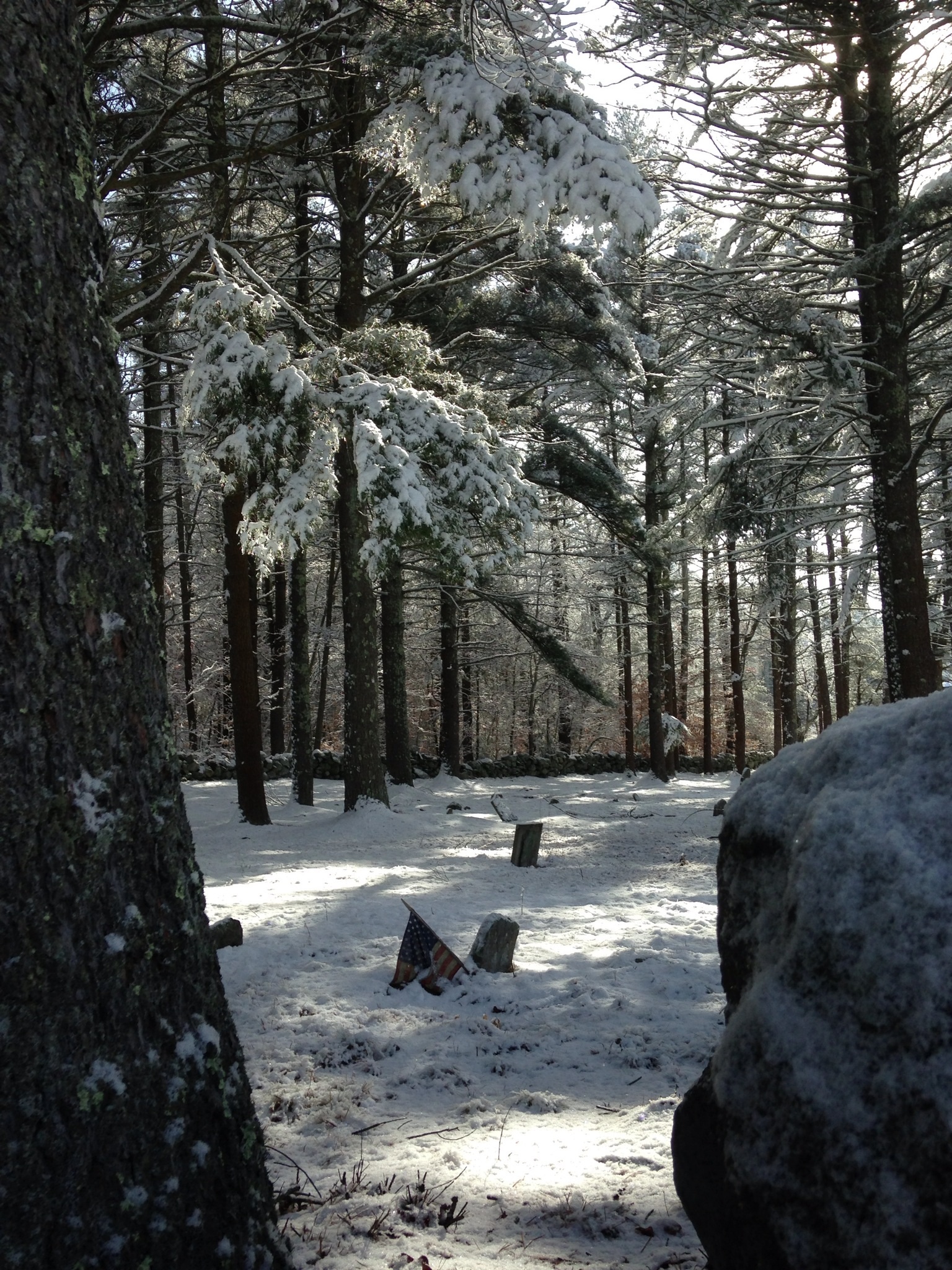
In such embrace, I rejoin earth, lay upon the ground. Although my body bends and bones crack, I’m content at the ache of my joints and all that is mortal which resonates through my mind.

Silence surrounds me, allotting my breath to slow along with my heart, as all the while my atrophy speeds undeterred without worry. As if submerged, I hear my body. Ear to ground, I listen to earth.

The very inspiration of my lungs, the rhythm of my heart, I am comforted with life even though I enjoy one less beat, lost one more second. I am whole even as I feel my mortal limits. I am whole in this timelessness of silence’s splendor.

Silence is patient. It waits all the while for you and me. It is omnipresent, awesome, and infinite if we could just listen a moment.

Relevance Lost

and so another Thanksgiving comes and goes. Memories hopefully were made, but I reflect on memories lost to time, the generations who came before us. Those people and traditions dearly missed yet with deep appreciation

My wife became ill enough last night that she went to our sleepy little seaside hospital’s ER. Back in less than two hours with the goods – antibiotics, she was rendered to the couch this Thanksgiving.

Coincidentally, after a brief stay seven years ago, she was discharged from said hospital exactly on this day as well. Her visits bookend trips with the kids down to New York, so that we could see the Macy’s Thanksgiving Day Parade, which leads me to the true point of the reflection.

image

Prone on the couch, my wife had a revelation about the Parade. “It’s all about selling something.”

Now cured of illness or removed from the chilly, noisy excitement of a sidewalk at 38th & 6th, she has realized that every float is a corporate sale vehicle, every dance act, the selling of Broadway, every faux rock countrified crossover disaster a recording label promotion; that, it’s all a well orchestrated sales job.

But isn’t that what made our postwar America great, I remind her. I realize our gap in generation. I’m a Baby Boomer, even if at the end of the Baby Boom. I grew up at the end of the America that survived Depression and War to dominate the end of the 20th Century. It was wholesome, benign celebration.

I recall Thanksgiving Days when the streets of New York weren’t the only streets filled with consumers revealing in this the only, truly American holiday; celebrating America, its tenacity, innovation, and industry.

Philadelphia, my father’s adopted city had Gimbels’ Parade and Detroit – yeah, Detroit was prosperous, energetic and displayed its relevance to the nation with the Hudson’s Parade. Smaller cities boasted of local enterprise and viable economies of competitve goods.

Gimbels and Hudson were larger department stores. Hell, Bernard Gimbel really was the father of these Parades – a 1920s ideal to annually christen the holiday shopping season; the soft sell.

Department Stores were city anchors, legacy icons before vapid Malls of publically traded, over-analyzed “Big Box” Retailers swept the map under cutting all that stood in their way. Those “Second” Cities were tied to an economic health based in the wealth of their hard working, functional middle class.

They promoted themselves in the face of Gotham’s Center of the Universe myopia, against Wall Street’s looming shadow and Broadway’s shiny allure; even television networks gave them air time before family, feast and football.

Detroit could afford seasonal cheer at the Hudson Parade and then, fill Tiger Stadium downtown for that annual Packer Lion football brawl. Philadelphia could forgo hoagies and cheese steaks for a day.

But like any competition, there are losers and these cities had the clock run out and lost. They lost the middle-class to the suburbs. Detroit sank with the sun as Asia rose again like a Phoenix; a compact, more efficient, well tooled Phoenix; even the Lions went suburban. Similarly Philadelphia was abandoned by racial disintegration, disinvestment, crime, fear and the strangulation of their nonmilitary industrial and manufacturing base.

It obliterated the American City. The winners consolidated those morsels of recovered assets and sold the rest. Many were left out (such as my father, left to sell the one house he ever owned, thanks to the G.I. Bill) and it forever changed America. For some of us, we’re reminded annually on that one day feast. The day celebrating those who dared nature for a better life – the debtors, losers, who, once committed to that ideal, in dire consequence, they found salvation in the form of dark strangers, who befriended and fed them.

Generations have heard that tale but fewer generations remember the greater story when we had choice; when the stores didn’t look all the same from sea to shining sea; when we had a middle-class and when our cities were relevant.